
Resume Updates or Retarget for Former Clients
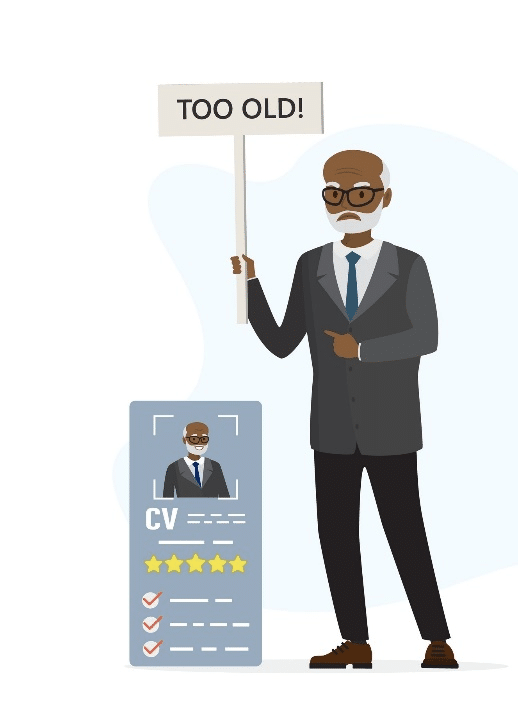
I remember when 60 plus was considered “old” in the job market. Back then, most all of my older coworkers either retired around 62 years of age, or after their 20+ year tenure with the company and moved to Florida. Then, for those who continued to work, eventually management would start trying to push them out. By this time, they might be around 65, which was the retirement age.
As you may be aware, many baby boomers are working longer now. Well Gen-Xers we’re up next! For discrimination in the job market that is. For the past 10 years or so I’ve been hearing the discrimination age is 50 and some even say 45! Goodness, I still feel like I’m in my early 30s. Most of the time.
So, there are several reasons for the discrimination. Many hiring managers say things such as: older workers are slow, cost more to insure them, call out sick a lot, don’t take instructions well, aren’t up to speed, etc. I would say some older workers might fall into those categories, but for the majority it just isn’t true.
There are also myths for the older job seeker who feels he or she can’t get hired. Which brings me to what I’m about to tell you. These are the top three myths about finding a job when you’re older and then 10 tips to job seeking. Yes, age discrimination is real, but everything isn’t set in stone. Let’s start with the myths.
The first myth is:
1. Job seekers over 50 have the greatest difficulty landing new positions.
This really depends on the position and company. There are many older recruiters who prefer an experienced professional, someone around their own age if they’re older. They don’t have to guess what they’re getting. You’ve learned how to handle obstacles, have experienced change, can think critically and you know your market. If you’re still active and someone with high energy that’s a huge plus.
2. Companies only want younger workers so they can pay them less.
I have heard a few of our clients say that, they were the first to be let go during a round of layoffs due to how long they were with the company. They happened to be in their mid-40s. One marketing manager who was around 50 years old, told me that she was making about $130K. She was laid off after more than 15 years with the company. About a week after she visited our office for her resume, she told me the company had already replaced her with someone half her age making $50K. However, this same client went on to another company of the same size in a similar marketing role making about $20K more than she was making before.
Do you know why? Because she showed her worth. Her career trajectory demonstrated that not only was she highly experienced and successful, but she was dependable. Therefore, the company didn’t have to worry about high recruitment costs. For example, spend money to bring her onboard, then spend more money in short time span to replace her, and train someone younger. Younger workers may be cheaper up front, but in the long run, if you have to keep replacing them, those costs become pretty expensive.
3. I Look Older
I remember years ago, I believe it was during the Great Recession back during 2008, when hundreds of older job seekers were getting cosmetic surgery done to make themselves look younger! I thought why in the world would someone pay $10K or more to look younger so that they can get a job? Well, according to one client who said her friend did this, $10K is nothing if you receive a return on the investment through the new job. Now, that’s IF you get the new job. Trust me, most employers don’t really care how old you look. As long as you look professional, you’re qualified for the position and you can fit into the company’s culture, that’s what matters most. Ahh! There’s that culture thing. We’ll get to that. Keep reading.
And Now the Tips:
1. Don’t reach for the sky just yet
You may be leaving your old job of 20 years because you feel it’s time you’ve moved into a director or VP role now, yet your career trajectory doesn’t show it. You’re thinking, “they’re hiring 30-year-olds for senior-level jobs here. I can do this!” If your career history only shows you’ve gone as high as a lead or supervisor, and maybe interim assistant manger off and on, unless you can show a significant amount of increased responsibility in those roles that were comparable to a director or VP role in the same industry, then it’s best to apply for a management role next. Your resume should be able to speak to just about everything the job description entails. With examples of key accomplishments and results. Which brings me to…
2. Evaluate the culture
Don’t just apply for a job because of the salary, stock options, location and perks. Yes, these things are important, but in order to be happy in your new role, consider other aspects, such as being truly passionate about what you can do. This will boost your energy so that you bring value to the company. If you go on an interview and realize that everyone in the department is between 25 and 30 years old and their main goal is to get things done fast instead of “right” then you might not fit in with that culture. If fitting into the culture means hanging out for beers every other night, then again, that might not be how you define a “good culture” and you might want to keep looking.
Now, on the other hand if they’re mature younger adults, then you may provide value by teaching them a thing or two. Many younger workers look for mentors and appreciate learning from older workers. If you are offered the job, try and find out what you’re getting into before you say yes.
3. Make sure your resume doesn’t date you
Yes, a recruiter will eventually realize that you may be over 50 (or 45) however, your resume shouldn’t scream old. Things like a Hotmail email address, not changing old company names (think the Bells in telecom) once they’ve been bought, showing old software skills, etc. this not only dates you, but shows you don’t like change, or you’re not staying abreast of changes in the market. Check out a previous article I wrote back in 2019 titled: Things That Can Date Your Resume. Yes, it was written years ago, but trust me, it still proves true today! You can find it under my LinkedIn Articles at: LinkedIn or the blog on BluePrint Executives.com.
4. Be ready to explain the unbelievable
When you’re over 50, sometimes you’re ready to take a step back and you don’t really care to make six figures anymore. By this time, you may have become a minimalist, have your 401K built up, money saved from a job you were laid off from, you and your spouse are empty nesters and so on. So, you say you’re willing to take a non-management or a management job with less pay just to keep busy and in the workforce. Most recruiters have a hard time believing this, so if this is true, then be ready to explain to the recruiter why and how you’re able to take a pay cut or lesser role than what you’re used to.
5. Complete Career Transition? Be VERY strategic about this
Maybe you’re tired of your industry, or the companies you’ve worked for in the last 10 years have been bought repeatedly. Now, you want something completely different. This can be tough, but it is doable. I’ve seen several clients make complete career transitions.
Make sure you do extensive research. It’s best to choose something you already have transferable skills in, meanwhile learn the additional skills needed, volunteer, sit on a Board of Directors for your new industry and build your network. If you can spend two to three years in your new field building up the most relevant accomplishments, this opens doors for you. When the opportunity comes along you will be more prepared.
6. Show Enthusiasm
Remember what I said about high energy being a plus? It’s true. I’ve seen some older workers ready to hit the ground running, committed to learning new processes, all about making a difference and willing to listen. And there are others I just shake my head at because they just have one speed… slow and think their experience is what sets them apart and makes them the crem de la crem. They have no desire to keep up in fast-paced environments, don’t like change and refuse to take direction, yet they wonder what the problem is when it comes to getting another job, or even getting promoted. You probably know someone like this. Which one will you be?
7. Don’t forget to add a cover letter with your resume
You may not think it’s necessary, but a cover letter can show the most important thing a hiring manager is looking for. How you are the solution! You can add a branding statement to your resume and some key examples, but in the cover letter you can specifically state how you will solve A&B, resulting in C&D.
When you’re reviewing a company’s job description, find out as much as you can about the company and speak to their pain points. Remember hiring managers hire people who can solve problems. This saves them time and money, so show them in that cover letter how you can do both.
8. Try smaller companies
This will definitely help if you’re trying to make a career transition. I once hired a previous government attorney as our editor assistant and she was phenomenal! Prior to law, her previous career was an English Teacher. I just wanted someone who was experienced, a great writer, knew what goes into a good resume, could build great rapport with people and dependable. I didn’t care whether the candidate was 30 or 60.
Many startups and small companies don’t really care about your age. So, whether you’re making a complete career transition or seeking a similar role as with your last company, if you can help steer a small company in the right direction for growing operations and revenue, your transferable skills are all that matters.
9. Stay current on the latest and greatest
One of the main things I always mention in my older clients’ cover letters, is how they stay abreast of state-of-the-art technology and the current trends. And I list them as well. For example, when the furniture industry started changing and the trend became to buy mattresses online and cheap furniture versus high quality furniture, our recruiter partners used to send us a lot of executives in those particular industries. We also had a few CEOs of major furniture companies come to us directly as they shut down or sold their businesses.
Because our clients understood why the market changed, the new trends and how to reach younger buyers, as well as new technologies impacting furniture design and manufacturing, it didn’t take long for them to land other leadership jobs in this industry, regardless of the fact that they were in their 50s and even 60s.
10. Start looking before you get your resume done, not after.
One of the first questions I ask potential clients when they call me is, have they reviewed any job postings of interest, or if they’re working with a recruiter. If I could get paid for every “No, I wanted to wait until I have my resume done first.” I would be super rich! Okay, so this is for whether you’re older or not. Today’s resumes have to be targeted to particular positions. This is why you seek out the positions first, then you tailor your resume to suit the position. This may be a pain, but if you’re targeting similar roles, tweaking it here and there gets easier with time.
So before you throw in the job search towel, rethink your job search strategy and get the job!
Need more tips? Email Me about what you would like to know more about and I’ll add it to my next newsletter.

Not only are employers looking to save money, but are tired of the new trends of quiet-quitting, employees quitting their so-called dream job after only working a couple of months, failing to show up for interviews, or even work the next day.
Have no fear. The battle over AI tools and their impact on the workforce has only started. According to Niki Jorgensen, Director of HR service operations for Insperity, “Even with the latest upgrade release of ChatGPT, managers realize that AI is not yet advanced enough to replace most jobs as many full-time roles require critical thinking, judgment and emotional intelligence.” And I would even add effective communication. These skills cannot be fully replaced by AI. Meanwhile, many companies have saved hundreds of thousands of dollars already using it.
Here are 5 things you can do to stay ahead and keep your job, or at least find another satisfying one.
1. Avoid Complacency
You may have settled on just learning software that’s necessary right now for your current role, and it may be something your company has been using for years although there are similar and later versions out there. Learn them! For one of our outplacement projects, we helped a team of project managers of a well-known tech firm navigate around this challenge, since all they knew was that firm’s software. Develop yourself and stay up to date with the most advanced tools. Especially project managers, because AI has already been coming for you.
2. Embrace it
This technology can assist you with productivity, efficiency and cost savings. Just last month, I had a client tell me how he implemented it for his operations department, and it’s proven highly effective at saving their customers time in getting the information they need. It’s also projected to save the company thousands of dollars this year alone.
3. Learn and Adapt
Find out what areas of your daily responsibilities may be automated or improved with AI for your industry. Learn new skills in data science, analytics and human development. Also similar to the previous example, collaborate with subject matter experts on where and how AI can bring value to your organization.
4. Be Flexible
Learn how to do more than one role at your company. In fact, that’s how I transitioned my career to IT years ago for a major telecom company. I was in customer service and at least twice a week, I would go over to our network operations and shadow someone. At first, I just wanted to learn what was behind it all. Eventually I was connecting satellite conferences for the government. As technology grew, I stayed abreast of the latest and eventually made it to senior level.
5. Keep relationships positive and your network current
Whether it’s upper management, your clients or business partners, develop and maintain strong relationships. This way, if AI does take over your job, you can be assigned to another one. A role that may require more of those soft skills I mentioned earlier. And don’t let your network dry up. Stay in touch on a regular basis. Don’t wait until 5 or 10 years later when you’re looking for a job to contact Rob (or whomever). He may have retired or be self-employed now.
In any case, remember AI is manmade. The tips above will help you to safeguard your career.

Resumes That Tell a Story
These are just a few Industries and Professionals Wendy Steele and her team have written for.
Sales and Marketing Executives Showing sales figures is one thing. Showing the value of the product or service you’ve delivered to customers is another.Software, education, consumer brands, hotel, medical, and pharmaceutical sales and marketing are just a few industries that Wendy Steele has written resumes for. If you have been circulating your existing resume or CV and feel pigeon-holed, the key is to show that you have the transferable skills necessary for any number of industries. A results-based resume followed by a strong cover letter can help. An executive bio also expands on your story by quickly detailing your overall career trajectory.
Insurance Territory Manager, Risk Manager, Client Director, Claims Director
The good thing about insurance resumes, is they break the norm when it comes to what you should and should not put on your resume. Relationship building and trust with the ability to accelerate partnerships are key for most jobs. And of course, regulatory compliance, licensesand certifications. The BluePrint Executives team has written insurance resumes for many years with great success.
Banking, Finance, Investments
You may know how to accelerate deals with the power of AI and how to leverage big data for multibillion dollar transactions. However, you need to convey this on your resume and your LinkedIn profile. Whether you are a Managing Director, President of Global Equities, or head a private equity firm, you face many challenges with unique demands. Wendy Steele and her team can show how “you” master the dynamics daily. Whether it’s hiring talent and assembling a strong executive team, spearheading mergers and acquisitions or simply taking care of your stakeholders, showing the results you deliver is key.
Accounting, Controller, Treasurer, CFO
Accuracy and Timeliness. You’re always driving yourself and your team to get things right. Also knowing the dynamics of your sector and keeping up with the latest ERP and other software are key abilities you need to show on your resume. However, the main thing a recruiter wants to see is how service-oriented you are, how you’ve delivered outstanding results for your clients and how you’ve scaled your company for growth. We have helped Controllers, Treasurers and CFOs for some of the largest companies in the U.S. for several industries. Many of our clientshave years of experience in restructuring companies and their debt, as well as helping them to survive mergers and acquisitions.
Hotel Manager or Vice President of Operations
You love people and you love being of service. Whether it’s a Four-Star Luxury hotel chain or a boutique establishment, your days always change. And the higher you advance in your career, the more critical it is for you to provide operational leadership in all areas. Showing how you and your team are experts in guest satisfaction and how your strategic planning and execution have improved financial performance will make your leadership resume, cover letter and/or LinkedIn profile shine! Wendy Steele’s first hospitality project was for the Marriott where she helped a team of executives with their career transition. This was in the mid-2000s. Since then ,she has helped several executive clients in New York, Georgia, Florida, North Carolina and many others. Most projects have been for luxury hotels and resorts.
Retail – Management, Regional Management, Director
Competing with e-commerce has been an uphill battle for numerous retailers through the years. Many have gone out of business, while others were able to use their creativity and talent to rebrand their companies. When it comes to resume writing, Wendy Steele and her team have worked with retail executives heading some of the largest chains in the U.S. and abroad. This includes, fashion, grocery, discount big-box stores, furniture, motor vehicles, building materials and more. From managers at the store level to corporate headquarters.
Healthcare Senior Director and C-Suite
Healthcare is one of the largest client bases Wendy Steele has. This could be due to her family being in healthcare leadership roles. From Director of Nursing, Senior Recruiter, Software Training Manager, insurance, HR Director, Physicians and Surgeons, along with numerous departments and C-level roles, there are very few positions or areas she hasn’t written for. That is why, when healthcare systems have gone through mergers and acquisitions, or when many professionals decided to make their career transition during the pandemic, they called Wendy
to market them in the best light possible.
Human Resources Executive
The good thing about Human Resources is, it is so multifaceted that it makes your exit strategy a little smoother than many other professions. And of course, being in the career services industry we love HR! Most people don’t realize that we network with recruiters daily, and constantly have workshops with them at our conferences. They keep us abreast of what they’re looking for, changes in applicant tracking systems and more. Here’s a tip: We write “their” resumes.
Information Technology (IT) Project Manager, Product Manager, Director, CIO, CTO, CCO, CEO
People say, you can’t quantify IT resumes, or it’s difficult to shape the narrative and tell a good story. If you’ve read the About page, then you may be aware that the Founder Wendy Steele was in IT for 11 years before she started her resume writing company. Whether it’s for telecom, Citrix, Scrum Master, DevOps Engineering, Software Developers, IT Security, or any other department or company that you oversee, she knows exactly what needs to be on an IT resume, executive bio and other career documents. Check out her interview in Good Housekeeping, My Brilliant New Career. Due to her background, Wendy works with IT executives every week. At least 65% of Wendy’s clients are in IT.
Education Administrator, District Superintendent, Principal, Chief Diversity Officer
The above positions are just a few we have assisted with. If you’ve weathered the storms through all the policy changes and bureaucracy in education, and now you’re ready for a change, my team and I can help. Many ask about additional documents such as personal statements, or specialty letters. No problem! Just ask. Please note, your original CV must not be over 10 pages.
Automotive Manager, Director, CEO
The auto industry is another large client base for us. From owners of luxury car dealerships to those of the AutoNation franchise, Wendy Steele (a car enthusiast herself) is originally from Toledo, OH, right next to Detroit, Mi, where she’s had numerous friends and family members employed in the auto industry. Now, living in the Southeast, she’s close to Mercedes Benz (Birmingham), at home near Porsche (Atlanta), and up the road from Kia (West Point, GA). Since being in the career services industry, she has learned a lot about the operations of every department in a dealership, and most areas inside a manufacturing plant. She understands every role there is and how to convey this effectively on your resume and other career documents.
Non-Profit Executive Director
As a previous founder of a non-profit organization, and being invited to several charity functions throughout the year, this has helped Wendy Steele understand the challenges and hard work that non-profit managers and directors must endure. The good thing about writing a non-profit resume, is that you have a lot of great experience and achievements to share! Whether you manage a large endowment, direct a museum, advocacy program, humanitarian or health organization, call BluePrint Executives to help you with your promotion or career transition.
Law Enforcement and Attorneys
Police officers, Lieutenants, FBI, and Secret Service agents who have gone on to executive security are the clients Wendy Steele has worked with the most. She has also worked with several attorneys and judges who are longtime clients. If you are a managing partner, senior attorney for in-house or outside counsel, an attorney trying to get a seat on the bench or work directly in the DA’s or ADA’s office, call Wendy.